Contents
- What is daily intention setting?
- Understanding the psychology of intention
- Morning pause: creating a calm start
- Setting a clear intention
- Aligning tasks with your intention
- Using a daily planner to reinforce habit
- Evening reflection: measuring calm productivity
- Daily intention setting vs traditional to-do lists
Every morning brings a fresh slate, but the sheer number of things we want to do can feel overwhelming. A simple, intentional start can turn that chaos into calm productivity. In this guide we walk through a step-by-step daily intention-setting routine, explain the psychology behind it, and show how a modest daily desk pad planner can quietly support a focused and flexible day.
What is daily intention setting?
Daily intention setting is the practice of choosing one clear focus or guiding purpose for the day before beginning work. Unlike a traditional to-do list that may contain dozens of tasks, intention setting prioritises direction over volume. It helps reduce overwhelm by giving your attention a single anchor to return to throughout the day.
Rather than asking “What do I need to do?”, intention setting asks, “What matters most today?” That subtle shift creates clarity and calm.
Understanding the psychology of intention
Setting an intention is more than writing a task, it is a mental cue that tells your brain what deserves priority. When you name a purpose, you direct attention and filter out distractions. This reduces the mental strain of juggling a vague sense of “too much to do”.
Research in goal-setting theory has consistently shown that specific, clearly defined goals improve motivation and persistence compared to vague or general aims (Locke & Latham). When a broad desire is translated into a concrete intention, it becomes easier for the mind to organise effort around it. Studies on implementation intentions also suggest that forming clear, actionable plans significantly increases follow-through (Gollwitzer, 1999). In practical terms, this means that defining your focus for the day acts as a mental anchor rather than just another item on a list.
Many people notice that when their day has a defined focus, they feel calmer and more in control. An intention works like a compass. It does not dictate every step, but it keeps you oriented toward what feels meaningful. This is why daily intention setting supports steady, sustainable productivity rather than frantic busyness.
Morning pause: creating a calm start
Before reaching for notifications or email, take a brief pause. Even two minutes of quiet breathing can shift your nervous system from reactive to centered.
Try this simple example: sit upright, inhale for a count of four, hold for two, and exhale for six. Repeat three times. Notice how your body feels afterward.
- Turn off notifications for the first five minutes.
- Take a sip of water instead of scrolling.
- Write one word that describes how you want the day to feel.
This small ritual creates mental space, making it easier to choose an intention thoughtfully rather than reacting to urgency.
Setting a clear intention
After your pause, write a single sentence that captures what matters most today. Keep it short, positive, and present-focused.
For example:
- “Complete the client proposal with clarity.”
- “Move forward on chapter two of the book I am reading.”
- “Approach conversations with patience.”
Writing the intention down makes it tangible. A quick glance later in the day can gently bring you back on track.
Quick Tip: at the top of your desk pad, write, “Finish the proposal draft and take a mindful walk at lunch.” This combines progress with wellbeing, reinforcing balance.
Aligning tasks with your intention
Once your intention is set, choose up to three tasks that directly support it. Limiting your focus prevents the overwhelm of an endless list.
For example, if your intention is “stay focused on the client proposal”, your three tasks might be:
- Outline the proposal structure
- Write the executive summary
- Review the budget section
Each task becomes a stepping stone toward the larger intention.
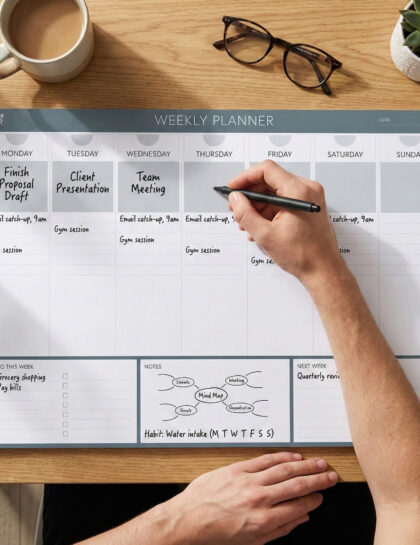
If you are planning your broader week using a flexible system, this daily practice pairs well with a weekly planning approach that avoids rigid time blocking. The weekly structure sets direction, while the daily intention sharpens focus.
- Prioritise tasks that serve the intention first.
- Defer or delegate lower-impact items.
Using a daily planner to reinforce habit
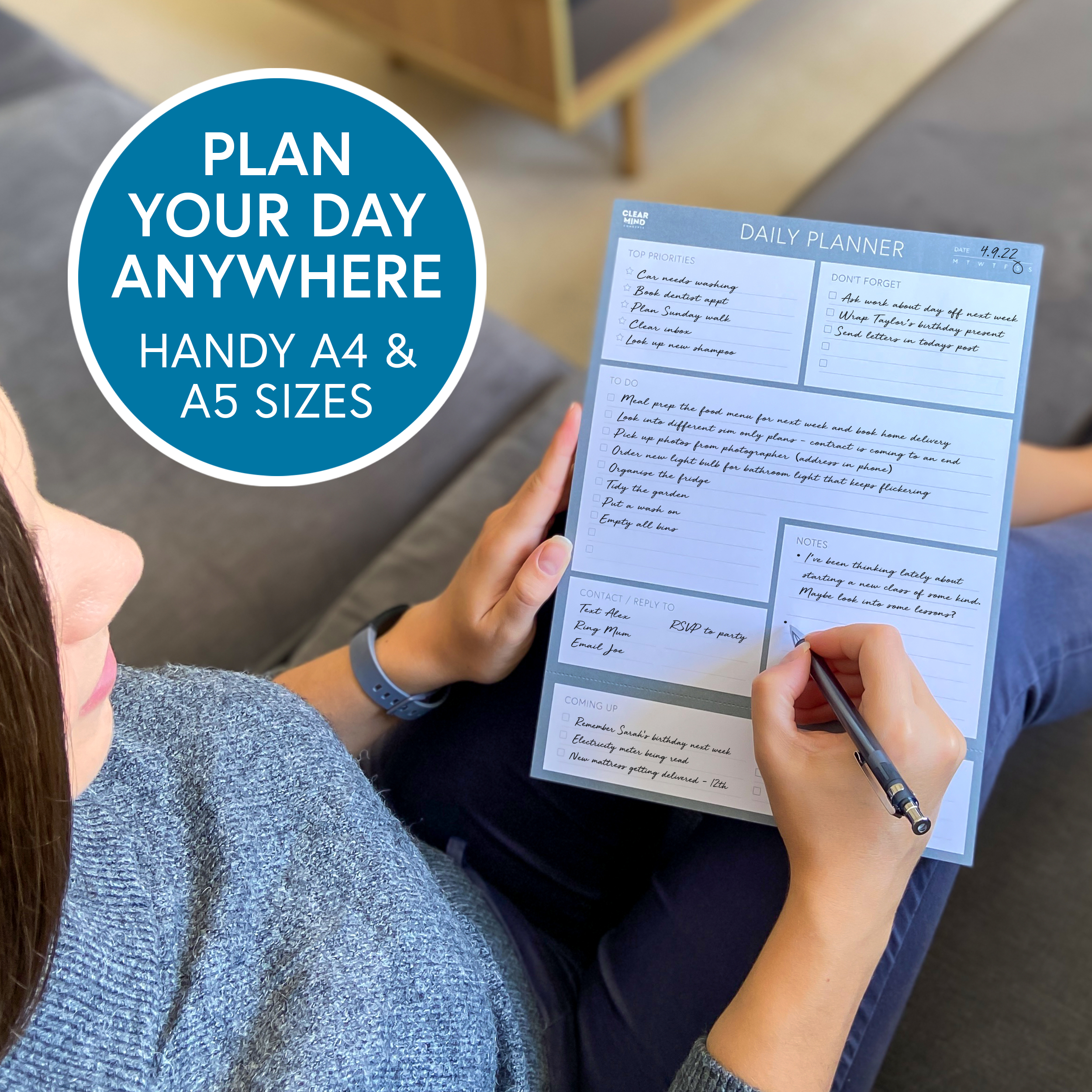
A physical planner offers a tactile cue that digital tools often lack. Opening a dedicated page each morning becomes a signal that it is time to focus.
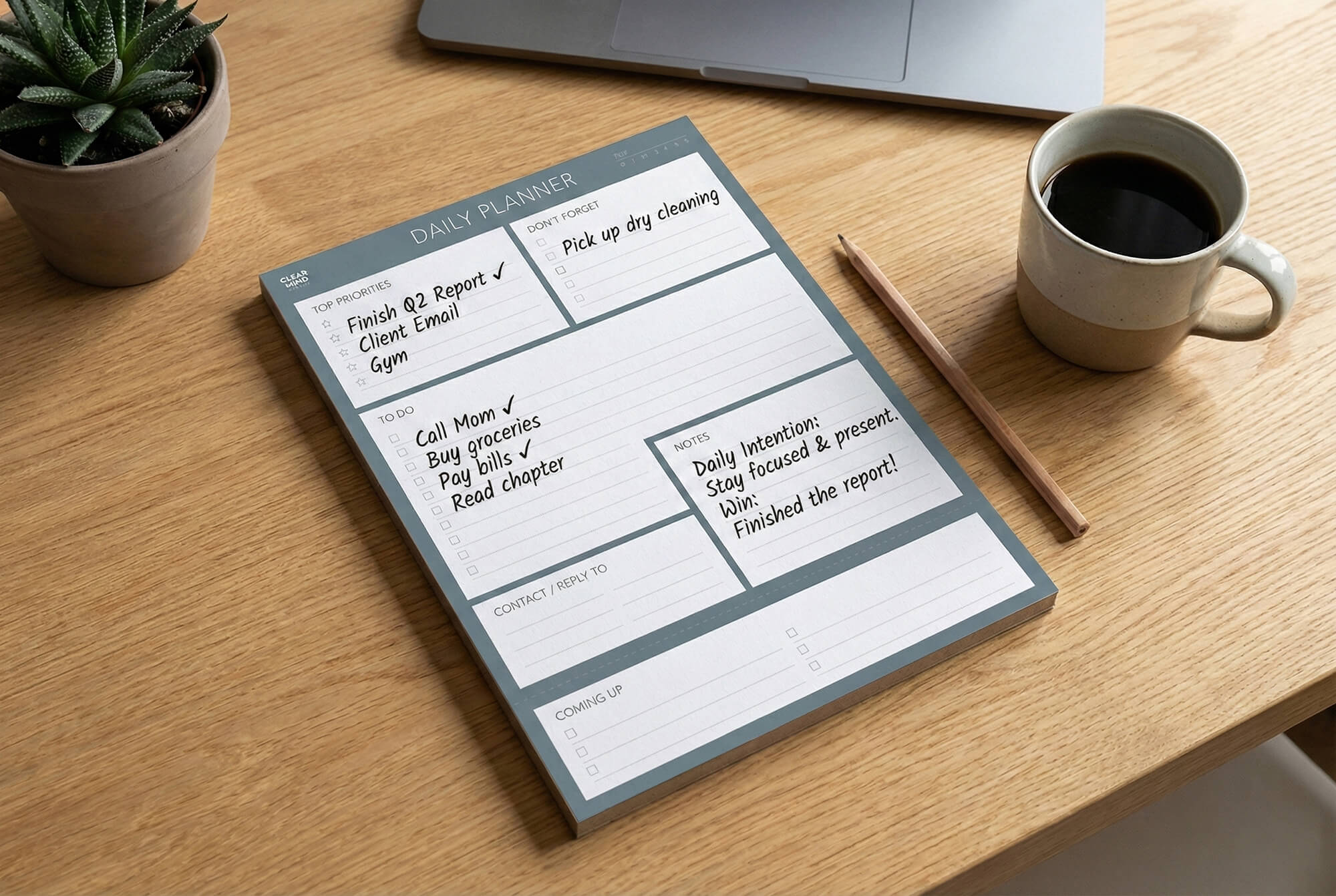
An undated daily desk pad planner allows you to begin any day without pressure. Because each page is used independently, you can see progress visually and start fresh whenever needed. The spacious layout provides room for your intention, three aligned tasks, and a short reflection.
Writing by hand reduces mental clutter. When tasks move from your head onto paper, they feel contained and manageable. Ticking them off provides a small but meaningful sense of completion.
Simple example: each evening, turn to a fresh page and draft tomorrow’s intention with three supporting tasks. In the morning, you simply review and begin.
- Undated pages remove guilt around missed days.
- A4 space gives room for clarity rather than cramped notes.
- Tear-off pages provide visible closure at the end of the day.
These small design elements reinforce consistency without creating rigidity.
Evening reflection: measuring calm productivity
At the end of the day, review what you completed. Did your actions align with your intention? Where did distractions appear?
This is not a judgment exercise. It is a gentle calibration.
You might write:
- Win: “Completed proposal draft.”
- Adjustment: “Emails pulled focus after lunch. Schedule a 20-minute email window tomorrow.”
Over time, this reflection builds awareness and strengthens the habit of intentional work.
Daily intention setting vs traditional to-do lists
| Traditional To-Do List | Daily Intention Setting |
|---|---|
| Long list of tasks | One clear focus |
| Reactive to urgency | Guided by priority |
| Can feel overwhelming | Creates clarity and calm |
| No emotional anchor | Linked to purpose or feeling |
While to-do lists are useful, intention setting adds direction. It shifts the day from busy to purposeful.
Key takeaways
- Daily intention setting gives your mind a clear anchor.
- A brief morning pause reduces reactive stress.
- Limiting yourself to three aligned tasks prevents overwhelm.
- A physical desk pad reinforces habit through tactile cues.
- Evening reflection strengthens consistency without pressure.
FAQ
How long should my daily intention be?
Keep it to one concise sentence or phrase. The simpler it is, the easier it will be to remember and act on during busy moments.
Do I need a special planner?
No special tool is required, but an undated daily desk pad makes the process smoother by keeping your intention, tasks, and reflection in one visible place.
What if I miss a day?
Missing a day is normal. Simply begin again the next day. Intention setting is about consistency over time, not perfection.
Conclusion
Daily intention setting is a gentle but powerful practice. By pausing in the morning, choosing one clear focus, aligning a few meaningful tasks, and reflecting in the evening, you create a rhythm that supports calm, sustainable productivity.
A simple daily desk pad planner can serve as a steady companion in this process, offering space to think, prioritise, and reset each day without the pressure of rigid scheduling.
Try this routine for a week and notice how your days begin to feel less scattered and more intentional. Small shifts, repeated daily, often lead to the most lasting change.