Contents
- Understanding why strict schedules can lead to burnout
- The role of cognitive overload in rigid planning
- How avoidance develops from inflexible rules
- Why flexible planning supports sustainable productivity
- Practical steps to create a flexible plan
- Rigid vs flexible planning: key differences
- FAQ
Many of us start the day with a detailed to do list, hoping that a strict schedule will keep us on track. Yet when the list feels like a set of unbreakable rules, stress builds, motivation drops, and tasks slip through the cracks. In this article we look at the psychology behind rigid planning, why it often backfires, and how a more flexible approach can support lasting focus and calm.
If you want the practical framework behind this approach, start with our hub guide to building a flexible planning system. If you are deciding between approaches, see flexible planning vs strict scheduling.
Quick definition: Flexible planning means organising your work around outcomes, focus areas, and adjustable time windows rather than fixed hour by hour rules. It reduces cognitive load and protects motivation by giving you room to adapt when the day changes.
Understanding why strict schedules can lead to burnout
When a schedule is packed with non negotiable time blocks, the mind receives a constant signal that every minute must be used perfectly. Over time, this pressure can feel exhausting and can contribute to burnout. Early signs often include lingering fatigue, irritability, and a loss of enthusiasm for tasks you once enjoyed.
One reason rigid schedules drain you is that they leave little space for recovery. The brain is not designed to operate at high effort continuously without breaks. Flexible planning builds in breathing room so you can reset mentally before moving on to the next activity. Many people find that allowing a small buffer each day reduces the sense of overwhelm.
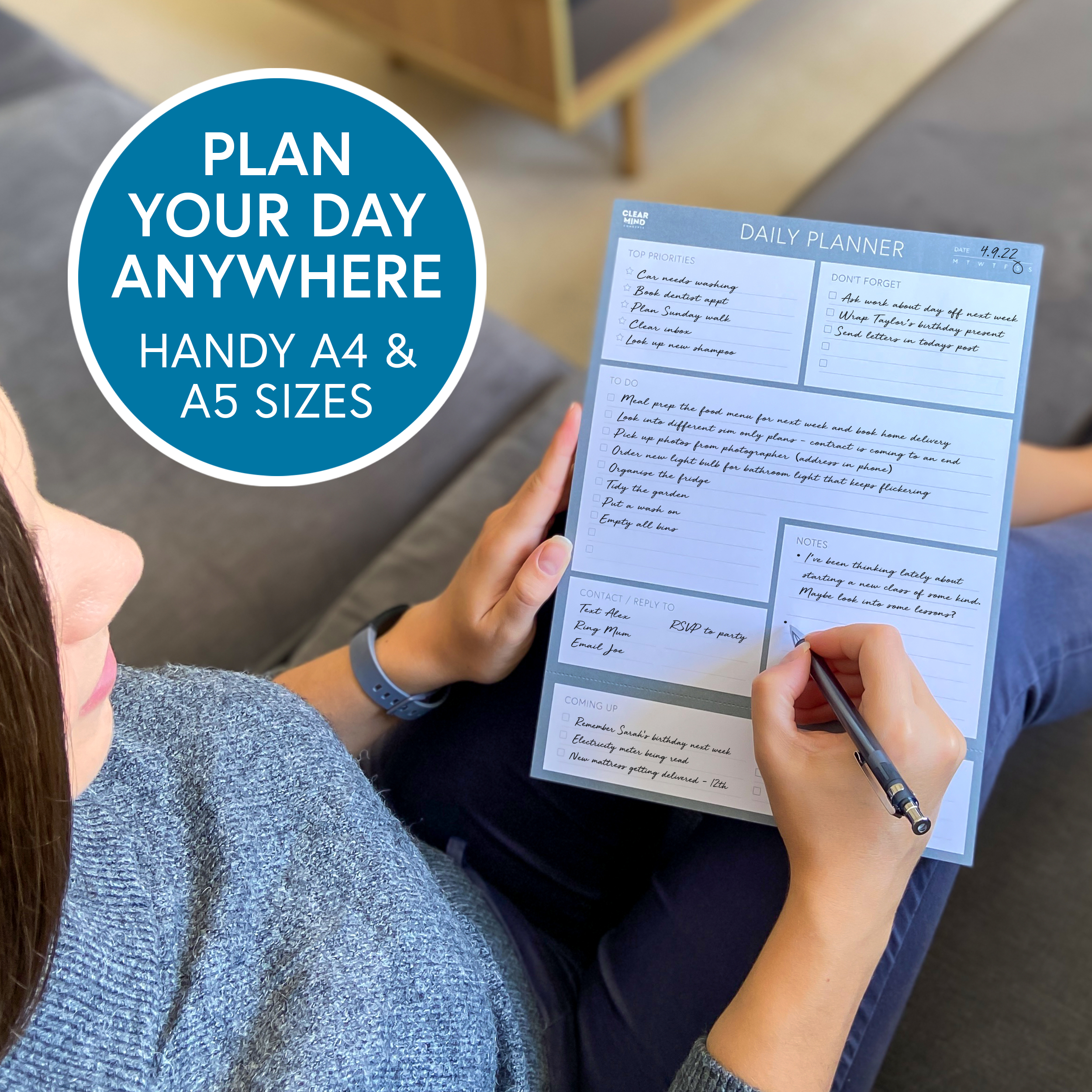
For example: you write tomorrow’s top three tasks on a sticky note, but you also leave a 15 minute free slot after each. When an unexpected email arrives, you can use the free slot or shift it without feeling you have broken the plan.
The role of cognitive overload in rigid planning
Rigid planning asks the brain to juggle many precise commitments at once. This can create cognitive overload, a state where the mental workload exceeds what we can comfortably process. When overload kicks in, attention fragments and it becomes harder to decide what to do next.
Because each task is tied to a fixed time, the mind constantly checks the clock, wondering if you are on schedule. That mental chatter drains attention resources, leaving less capacity for deep work. This is closely related to decision fatigue: the more small decisions you force yourself to make, the harder it becomes to stay focused and follow through.
A simple fix is to reduce the number of rigid decisions you make in advance. Group similar activities together and give them a loose time window instead of a strict start and end time. That way you maintain direction without the mental strain of constant micro tracking.
How avoidance develops from inflexible rules
When a rule feels impossible to meet, the brain often reacts by avoiding the task altogether. This is not laziness. It is a protective response to the stress of potential failure. Over time, repeated avoidance can turn into a habit, making procrastination feel normal.
For example, if you set a rule that you must write 500 words before lunch but you are already behind, the pressure can make you put the writing off entirely. This creates an all or nothing cycle: once the plan is broken, it feels pointless to continue.
Flexibility interrupts that pattern. By allowing a range, such as 300 to 500 words, you keep the goal realistic and give yourself permission to start even when you are not at peak energy.
For example: start by writing the first sentence of a report as soon as you sit down, without worrying about length. Small starts reduce friction and often build momentum.
Why flexible planning supports sustainable productivity
Flexible planning aligns with basic principles of cognitive load and intrinsic motivation. When you feel you have autonomy, it is easier to begin and easier to continue. Instead of forcing a rigid structure, flexible planning respects natural energy fluctuations and makes it easier to keep moving forward when the day changes.
Key benefits include:
- Reduced stress: you are not constantly fearing that one delay will ruin the day.
- More steady motivation: you choose what to tackle based on priorities and capacity, not panic.
- Better adaptation: unexpected tasks can be absorbed without derailing the entire plan.
- Long term consistency: because the plan feels doable, you are more likely to stick with it.
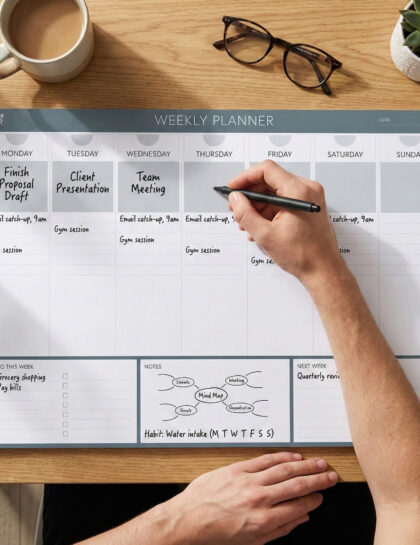
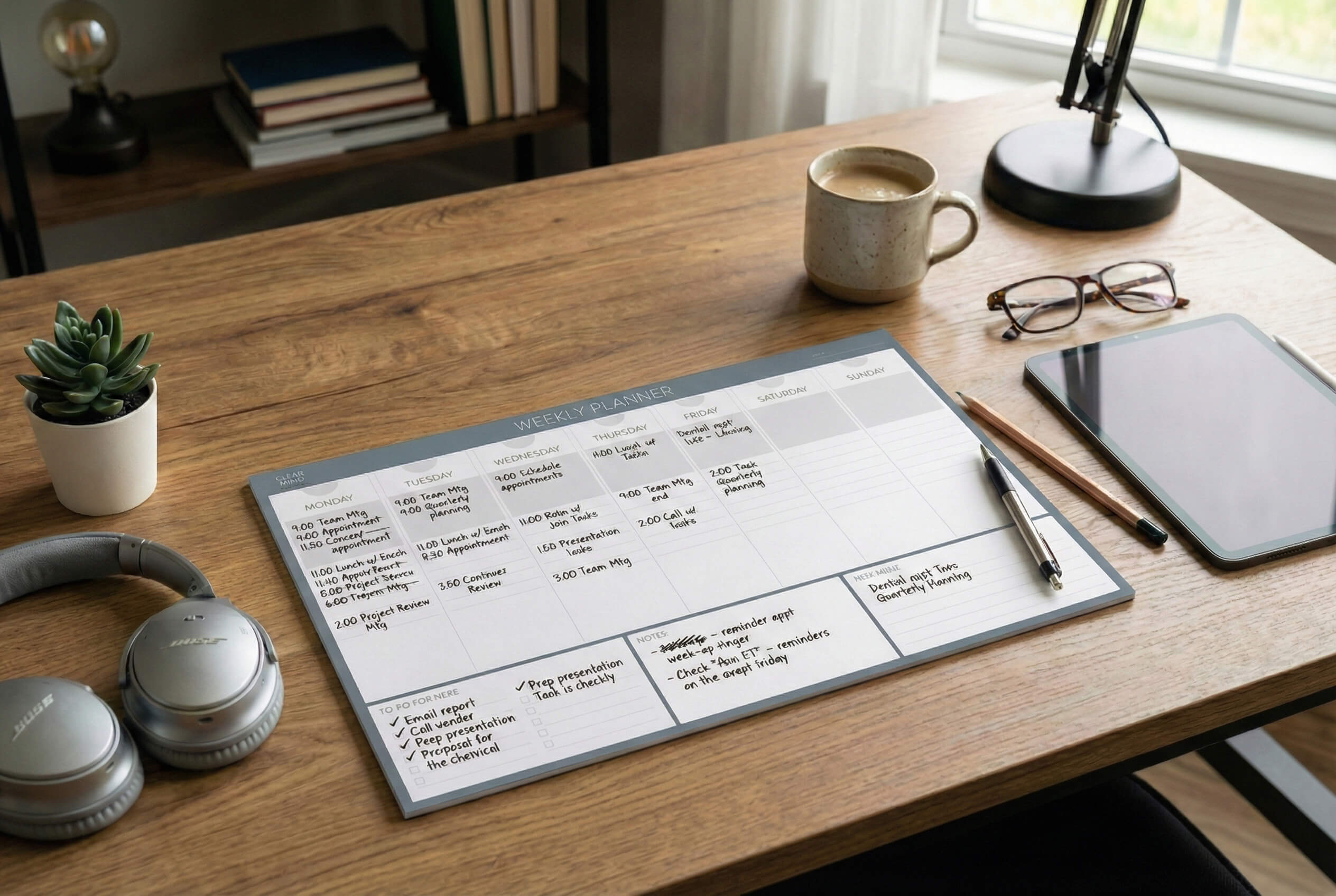
One practical approach is to keep a weekly overview that highlights priorities while leaving daily slots open for adjustment. If you want a step by step method for this, see our guide on how to plan your week without time blocking.
Practical steps to create a flexible plan
Creating a flexible plan does not require a complete overhaul of your routine. Start with these simple steps.
- Identify core priorities. Write down the two or three outcomes you need this week. These become your anchors.
- Use loose time windows. Instead of 9:00 to 10:00 for emails, set a 9:00 to 11:00 window. You keep structure but remove the pressure of exact timing.
- Add buffer blocks. Insert short unassigned slots between tasks. Use them for breaks, overflow, or unexpected work.
- Keep fixed points truly fixed. Meetings and appointments go in the calendar. Everything else stays adjustable.
- Review briefly. Each evening, note what worked, what felt too tight, and what you will shift tomorrow.
For example: you have a client call at 2 pm. Mark that as a fixed point, then place “project work” in a 10 am to 12 pm window and “review notes” in a 3 pm to 4 pm window. If the call runs long, you shift the later window without losing the day.
If you prefer a tactile weekly view, a structured weekly planner can make focus areas and buffer space easy to see. For quick daily adjustments, a desk pad can work well.
Rigid vs flexible planning: key differences
Use this comparison as a quick reference when you are deciding which style fits your current workload.
| Rigid planning | Flexible planning |
|---|---|
| Fixed start and finish times | Adjustable time windows |
| Little or no buffer time | Built in buffers for overflow |
| Delays feel like failure | Tasks can be moved without guilt |
| Higher cognitive load from clock checking | Lower cognitive load with fewer rigid decisions |
| Encourages all or nothing thinking | Encourages steady progress and recovery |
Key takeaways
- Strict schedules can contribute to burnout by leaving no mental breathing room.
- Rigid plans increase cognitive load and decision fatigue, which makes focus harder to maintain.
- Inflexible rules often trigger avoidance and all or nothing thinking.
- Flexible planning supports autonomy, lowers stress, and improves consistency over time.
- Buffers and loose time windows help your plan stay realistic when life changes.
FAQ
Can I use a flexible plan if I have many deadlines?
Yes. Mark non negotiable deadlines and fixed appointments first, then build loose work windows around them. This lets you honour the hard dates while keeping the day adaptable.
How do I stop feeling guilty when I do not follow a strict schedule?
Shift your mindset from must do to choose to do. Flexibility is a strategy, not a lack of discipline. When you adjust a time window, note the reason and move forward without self criticism.
What tools support a flexible planning approach?
Simple tools like a weekly planner, a desk pad for quick notes, or a wall calendar work well. They keep priorities visible while leaving room for real life changes. Choose what feels easiest to maintain.
Conclusion
Rigid schedules may look organised, but they often clash with how our brains operate, which can lead to burnout, avoidance, and inconsistency. By embracing flexibility through clear priorities, loose time windows, and buffer space, you create a planning system that respects mental limits and adapts to life’s surprises.
When you let your plan breathe, you may notice steadier progress, lower stress, and a renewed sense of control. Start small, adjust as you learn, and build a rhythm that supports both your goals and your wellbeing.