Contents
- Why planning systems often fail
- Overloading your planner with too many tasks
- Rigid scheduling that leaves no room for flexibility
- Skipping regular reviews and reflections
- Ignoring priorities and focusing on low-value tasks
- Using the wrong planner format for your lifestyle
- Not building habit cues into your planning routine
- Quick overview of common planner mistakes
- Key takeaways
- FAQ
- Conclusion
Many of us start a new planner with enthusiasm, only to see the system crumble after a few weeks. The reasons are often simple habits that clash with how our brains actually work. In this guide we’ll look at the most common planner mistakes that cause planning systems to fail, explain why they matter, and share gentle fixes that keep your planning routine realistic and sustainable.
Why planning systems often fail
Many planning systems fail not because people lack discipline, but because the structure of the system clashes with how attention, energy, and habits naturally work. When planners become too rigid, too crowded, or disconnected from daily routines, they create friction instead of clarity.
Understanding the common mistakes behind failing planning systems makes it easier to adjust your approach. Small changes, such as reducing daily tasks or adding a weekly review, can transform a planner from a stressful obligation into a supportive guide.
Overloading your planner with too many tasks
When you try to squeeze every single to-do onto one page, your planner becomes a source of stress rather than clarity. Overloading your planner often leads to unfinished lists, decision fatigue, and the feeling that you are always behind.
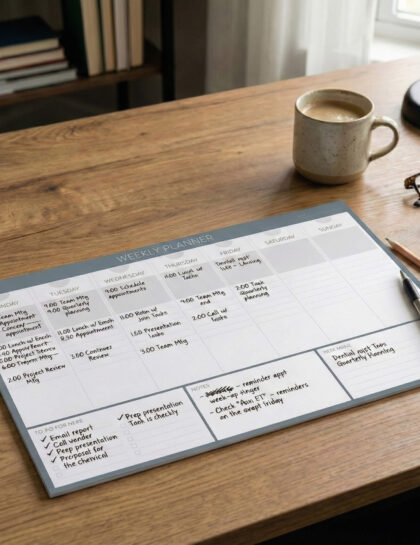
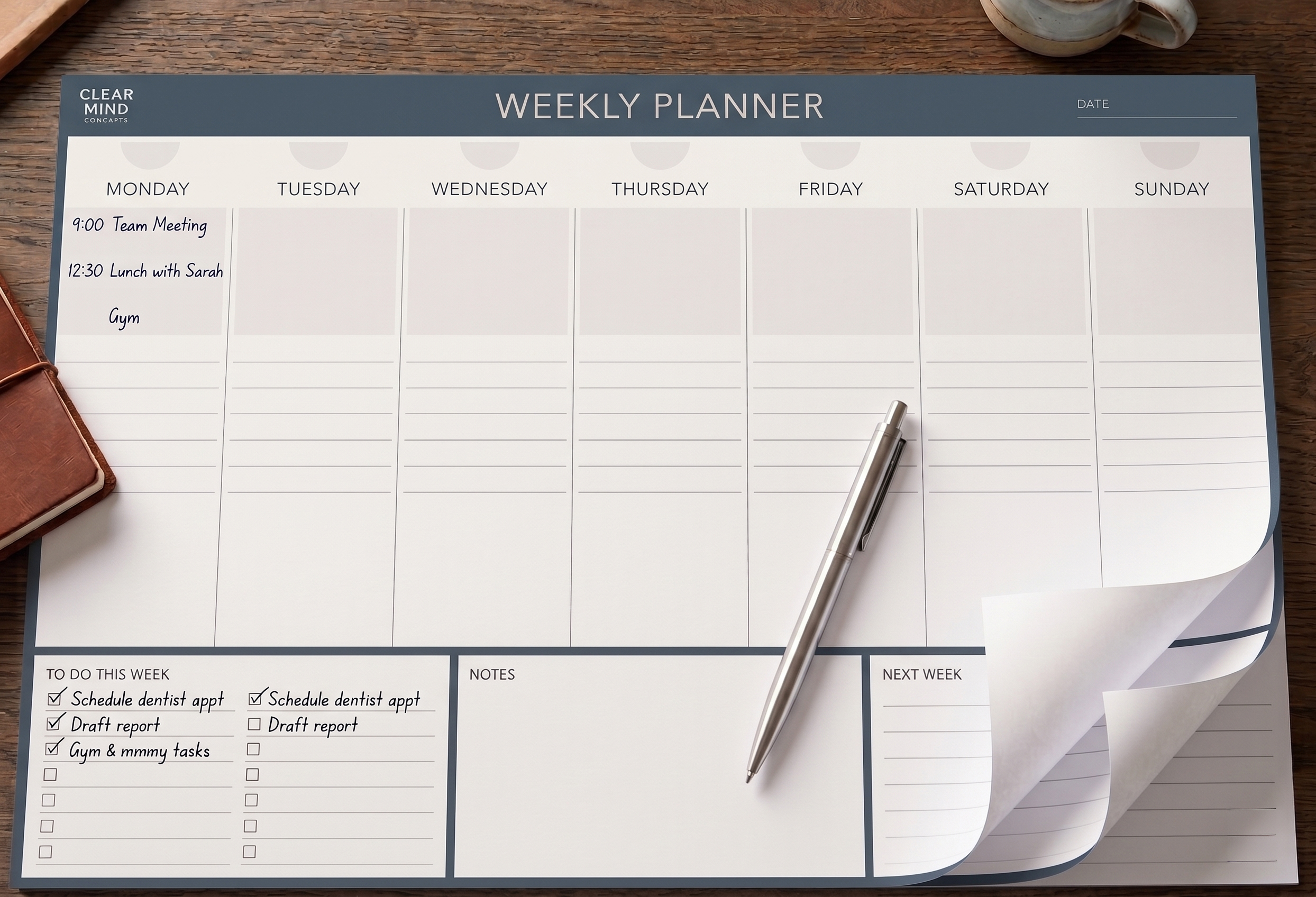
Fix: Limit each day to three core tasks. Write them clearly and leave the rest for an “if time allows” list. If you like more space to write and see your day clearly, a larger weekly layout can help. For example, a spacious weekly desk planner makes it easier to keep the page uncluttered and focused.
Once the three core items are done, you can add one or two optional tasks. Keeping the optional list short protects the sense of progress.
Rigid scheduling that leaves no room for flexibility
A schedule that blocks every hour can feel restrictive. Rigid schedules often fail because life rarely follows a perfect script. When something runs late, the whole plan can collapse, and that can make planning feel pointless.
Fix: Use flexible blocks instead of fixed start and end times. Write a block such as Morning focus: project work and keep the exact timing open. If something urgent appears, you can shift the block without breaking your entire day.
For example: You planned a meeting mid-morning, but a client call ran long. Because you used a flexible block, you move the meeting to the next available window and keep the rest of the day intact.
If strict schedules regularly frustrate you, you may prefer a more adaptable approach. Our comparison of flexible planning vs strict scheduling explains when each style works best.
Skipping regular reviews and reflections
Planning is a loop, not a one-time event. Skipping reviews reduces the usefulness of a planner because you miss the chance to adjust and learn what actually works for you.
Fix: Add a short weekly review at the end of the week. Look at what you completed, what moved, and what kept getting delayed. Then set one or two simple priorities for next week.
If your weekly layout includes a “next week” area, use it to carry forward unfinished priorities without rewriting everything. If you want a simple structure for this, our guide on how to plan your week without time blocking shows an easy review-and-adjust flow.
Ignoring priorities and focusing on low-value tasks
When your planner fills up with small, low-impact tasks, the important work gets buried. You stay busy, but progress feels slow because energy is spent on what matters least.
Fix: Choose one top priority each day and make it obvious on the page. Everything else is secondary unless it directly supports that priority.
For example: If a report is due Friday, mark it as your top priority on Monday. Then make sure the biggest blocks of attention go to the report, while routine emails sit in a smaller, lower-priority list.
Many people also use a short daily intention to guide what matters most. You can learn a simple routine in daily intention setting for calm productivity.
Using the wrong planner format for your lifestyle
A planner that does not match how you live will quickly feel like a chore. If the format fights your routines, consistency drops, even if your intentions are good.
Fix: Choose a format that supports your planning style:
- Weekly planners work well for seeing priorities across the week and keeping plans flexible.
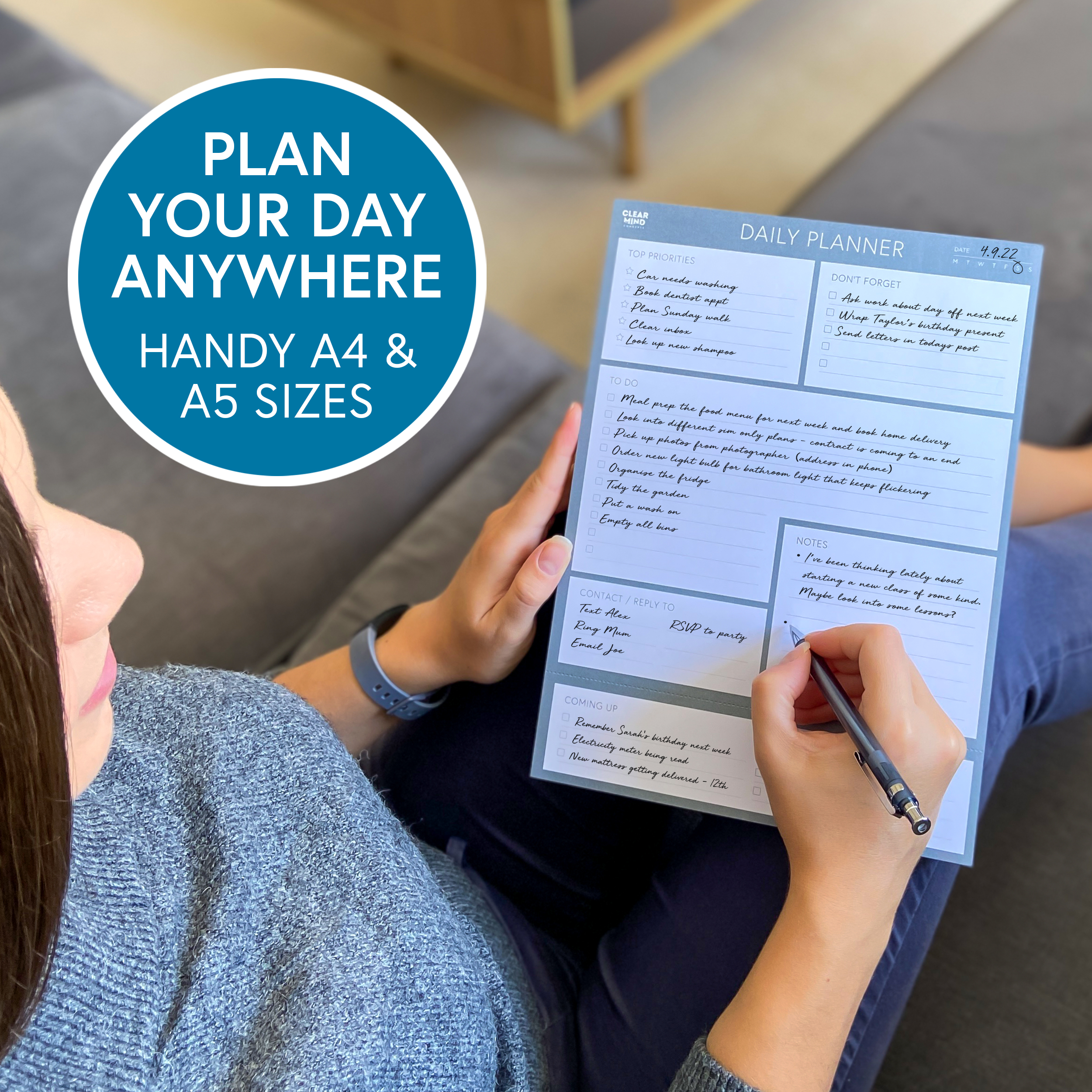
- Daily planners work well when you need a focused “today” view and a short, calm task list.
- Monthly planners work well for deadlines, events, and longer-range planning.
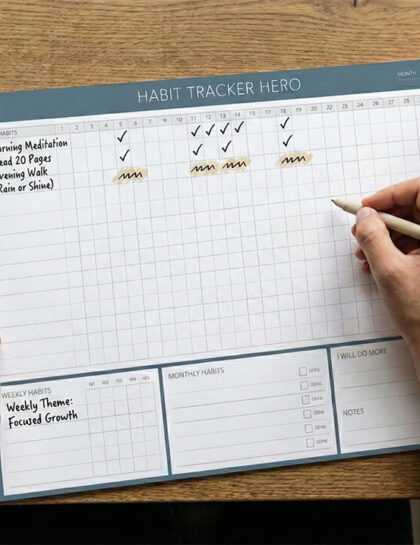
If you often miss days or weeks, an undated planner can remove pressure because you can start again without wasting pages. You can explore options in our desk planners range and choose the format that fits your space and routine.
Not building habit cues into your planning routine
Planning only works when it becomes a habit. Without a consistent trigger, it is easy to forget to open your planner, especially on busy days.
Fix: Add one simple cue that makes planning automatic. Choose a consistent moment (for example, after breakfast or after you shut down work), and pair it with a tiny action, such as writing tomorrow’s top three tasks or circling your top priority.
For example: Each evening, write “Top 3 for tomorrow” at the bottom of the page. In the morning, the cue is already there, prompting you to fill in your tasks before you start.
Quick overview of common planner mistakes
| Mistake | Why it causes problems | Simple fix |
|---|---|---|
| Too many daily tasks | Creates overwhelm and unfinished lists | Limit to three core priorities |
| Rigid scheduling | Breaks when plans change | Use flexible focus blocks |
| No weekly review | Plans do not improve over time | Add a 10 to 15 minute weekly check |
| No clear priority | Important work gets buried | Pick one top priority daily |
| Wrong planner format | The tool creates friction | Match daily, weekly, or monthly to your routine |
| No habit cues | Planning becomes inconsistent | Attach planning to a reliable trigger |
Key takeaways
- Limit daily tasks to three core items to keep your planner clear.
- Use flexible focus blocks instead of rigid hour-by-hour schedules.
- Schedule a short weekly review to adjust and improve your plan.
- Mark one priority each day and treat other tasks as secondary.
- Choose a planner format that fits your lifestyle for consistent use.
- Add simple cues to make planning a repeatable habit.
FAQ
How often should I review my planner to stay on track?
Most people find a quick 5-minute review at the end of each day and a deeper 10 to 15 minute weekly review work well. The daily check-in helps you spot unfinished tasks, while the weekly review helps you adjust what is realistic.
Can I use a digital calendar together with a paper planner?
Yes. Many people use a digital calendar for appointments and a paper planner for priorities, habits, and weekly overviews. This keeps time-sensitive events separate from flexible tasks.
What if I miss a week and my planner feels out of sync?
Start where you are. If you use an undated planner, you can simply write the current week and continue. If your planner is dated, treat the missed week as data, not failure, and restart with a lighter, more realistic plan.
Conclusion
Planning should feel like a gentle guide, not a rigid rulebook. By avoiding common pitfalls such as overloading pages, locking yourself into inflexible schedules, skipping reviews, neglecting priorities, choosing the wrong format, and ignoring habit cues, you create a system that supports your natural workflow.
Remember, the goal is progress, not perfection. Experiment with the fixes above, notice what works, and let your planner evolve with you. Over time you’ll find a rhythm that reduces overwhelm and brings clarity to each week.
If you want a simple place to start, explore our weekly desk planners and choose a layout that gives you enough space to plan realistically.