Contents
- Common frustrations with time blocking
- The flexible alternative: an overview
- Identify your top three outcomes for the week
- Group tasks into focus areas
- Create a visual weekly layout (list or board)
- Add flexible time slots and buffers
- Review and adjust each day
- FAQ
Many people feel frustrated by rigid time blocking. The pressure to stick to a minute-by-minute plan can make a busy week feel like a treadmill. This guide shows you a softer, goal-focused way to organise your week that respects changing priorities and natural energy patterns. By the end, you’ll have a clear, adaptable system you can start using tomorrow.
If you’re unsure whether a flexible approach or a stricter schedule suits you better, you may find our guide on flexible planning vs strict scheduling helpful.
Common frustrations with time blocking
When you try to allocate every hour of a day, the first thing that often goes wrong is the unexpected. A meeting runs late, a child gets sick, or a creative spark arrives at an odd hour. Those moments can feel like failures because the schedule leaves no room to move. For many people, the stress quickly outweighs any sense of control.
Another pain point is the mental load of constantly checking the clock. You might find yourself asking, “Did I finish task A yet?” instead of focusing on the work itself. Over time, that mental chatter can drain motivation and make the week feel overwhelming rather than empowering.
The flexible alternative: an overview
A flexible weekly structure can accommodate changing priorities better than a fixed hour-by-hour plan. Instead of locking yourself into exact times, you work with broader blocks such as “morning focus” or “afternoon admin”. Within those blocks, you choose tasks that match your energy and the day’s demands.
This approach still gives you direction. You know what you aim to accomplish each day, but you remove the pressure of exact start and stop times. It also makes it easier to shift work when life throws a curveball, keeping you on track without feeling like you’ve broken the rules.
When you plan your week without time blocking, you shift the focus from rigid hours to meaningful progress.
Identify your top three outcomes for the week
Start by asking yourself: what are the three results that would make this week feel successful? Write them down somewhere you’ll see daily, such as a sticky note on your monitor, a note in a planner, or a quick entry in a digital list.
For example, you might decide that this week you want to (1) finish the draft of a client report, (2) schedule three networking calls, and (3) clear out an inbox backlog. By keeping these outcomes front and centre, you can align daily tasks to move you toward them rather than drifting through unrelated activities.
You may notice that some days naturally lend themselves to certain outcomes. If you feel most alert on Tuesday morning, that could be a good moment for the report draft. The key is to let the outcomes guide the choice of tasks, not the other way around.
Group tasks into focus areas
Theme-based planning helps align daily tasks with overarching weekly goals. Take the three outcomes you identified and turn them into focus areas, such as “Report Writing”, “Networking”, and “Inbox Management”. Then list every task you need to do under the appropriate heading.
When you look at the list, you’ll see clusters of related work. This makes it easier to batch similar activities. For instance, making all your networking calls back to back reduces the mental effort of switching between unrelated tasks.
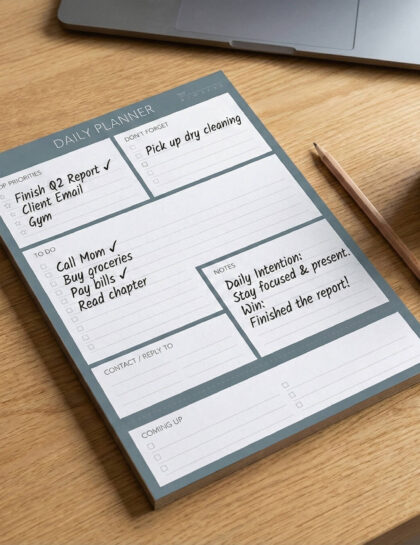
For example: you might write tomorrow’s top three tasks by hand, grouping two short emails under “Inbox Management” and a 30-minute call under “Networking”. Seeing them together makes it easier to decide which focus area fits best into the day’s flexible block.
Create a visual weekly layout (list or board)
Visual weekly layouts, such as simple lists or boards, make task distribution easy to see at a glance. Choose a format that feels natural, whether that’s a paper list, a planner page, or a basic digital note. The goal is to see your week clearly without drowning in detail.
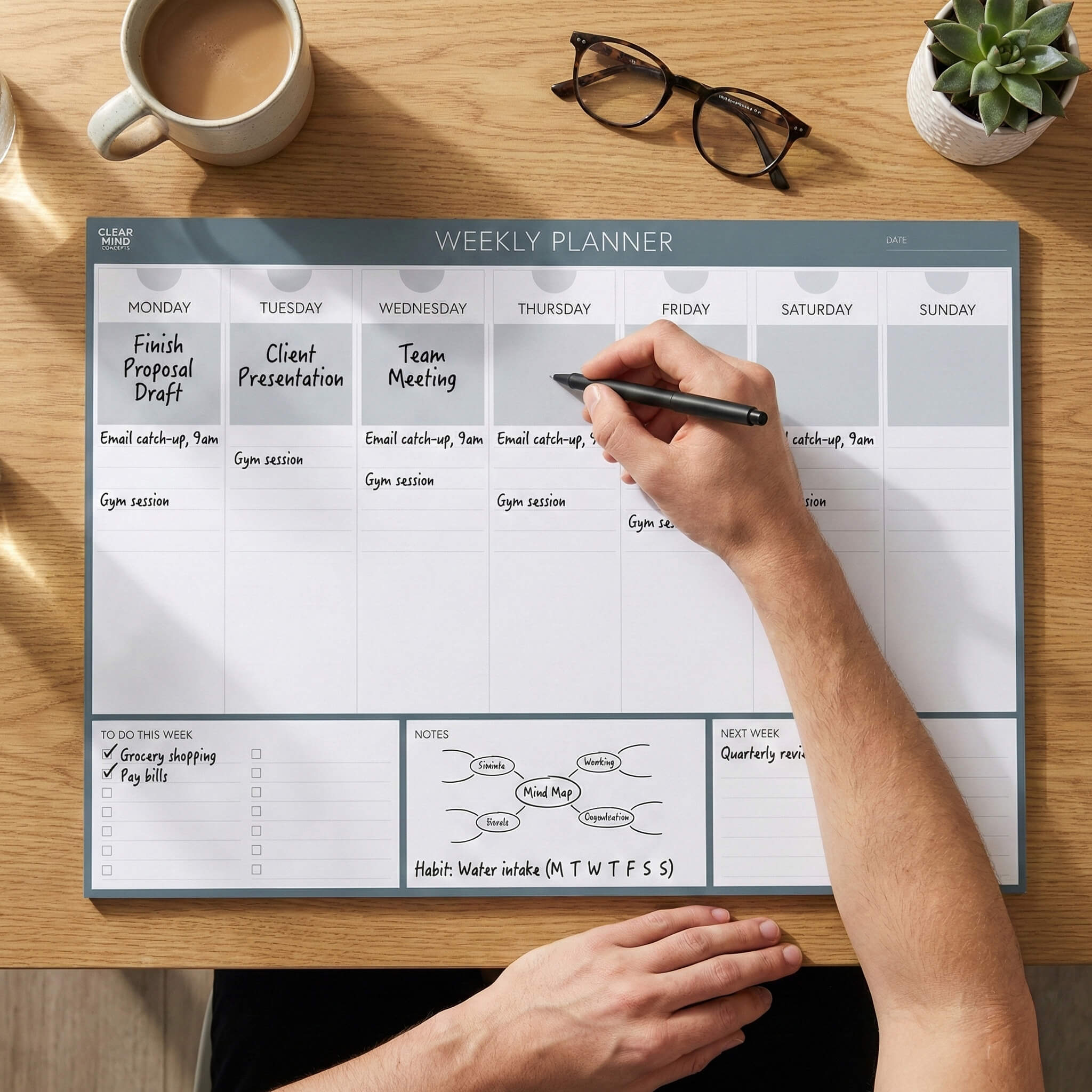
Start by drawing seven columns for each day or a vertical list of days. Under each day, place the focus areas you plan to work on. You don’t need to assign exact times. Just note the area, like “Report Writing” on Monday and “Networking” on Wednesday.
Adding a visual cue, such as a coloured dot for high-priority items, can help you spot the most important work quickly. If you use a paper planner, you could add a small icon, like a star, next to each focus area. If you prefer a ready-made format, a structured weekly planner can make it easier to see focus areas and buffer space at a glance without having to draw your own layout.
Add flexible time slots and buffers
Including buffer slots reduces stress when tasks overrun. After you’ve placed your focus areas, add a few open slots labelled “Buffer” or “Free”. These are not booked for a specific task. They exist to absorb spillover or unexpected work.
For example, you might aim for a 60-minute morning focus for “Report Writing” and then keep a 30-minute buffer before lunch. If the work takes less time, you can use the buffer for a quick email or a short walk. If it runs longer, the buffer protects the rest of your day from being pushed off track.
Energy-aware planning can also make the week feel smoother. Notice when you feel most alert, perhaps mid morning, and place your most demanding focus area there. Less demanding tasks can sit in the afternoon or inside buffer slots.
Review and adjust each day
Reviewing and adjusting each day keeps the week adaptable and on track. At the end of the day, spend five minutes looking at what you completed, what slipped into a buffer, and what still needs attention.
If a task didn’t get done, decide whether it belongs in tomorrow’s focus area or whether it should move to a later day. The flexibility of this system means you can shift without feeling like you’ve failed.
For example: you notice that on Tuesday you only managed half of the networking calls because a client meeting ran long. You can move the remaining calls to Thursday’s buffer slot, keeping the overall weekly outcome intact.
Over time, you may spot patterns. Perhaps you consistently need more buffer on Wednesdays. Adjust your weekly template accordingly. This iterative tweaking turns the plan into a living tool rather than a static checklist.
Key takeaways
- Start the week by naming three concrete outcomes you want to achieve.
- Group tasks into focus areas that match those outcomes for easier batching.
- Use a simple visual layout, list or board, to see the week at a glance.
- Add open buffer slots to absorb overruns and unexpected tasks.
- Review each day and shift tasks as needed to stay aligned with goals.
FAQ
Can I use this method with a digital planner instead of paper?
Yes. This flexible approach works with any tool that lets you move tasks around easily. Some people prefer digital apps, while others find that writing things down keeps them more focused and present. If you enjoy a tactile experience and a clear visual overview, a paper planner can make weekly outcomes and buffer space easier to see at a glance.
How much time should I spend planning each week?
Most people find that 15 to 20 minutes is enough to identify outcomes, group tasks, and sketch a visual layout. The daily review only takes a few minutes, so the total planning time stays low while still giving you clear direction.
What if I have a very unpredictable schedule?
If your days change frequently, increase the number of buffer slots and keep the focus areas broad. Instead of “Write report chapter 1”, use “Work on report” as a focus area. This lets you drop in any part of the work whenever a free window appears without feeling locked to a specific task.
Conclusion
Planning a week without strict time blocking is about giving yourself a roadmap, not a prison. By naming three outcomes, grouping tasks, visualising the week, and protecting space for buffers, you create a system that moves with you rather than against you. The daily review ties everything together, turning the plan into a living guide that respects both your goals and the inevitable surprises of life.
Give this flexible method a try this coming week. You may notice less stress, clearer focus, and more room for the things that matter most, all without the pressure of a minute-by-minute schedule.
This article is part of our flexible planning series. For a complete overview, visit our guide to building a flexible planning system.