Contents
- What is weekly planning?
- What is daily planning?
- Benefits and ideal situations for weekly planning
- Benefits and ideal situations for daily planning
- Hybrid approach: linking weekly and daily
- How to choose the right planner for you
- Frequently asked questions
It’s 8:15 am, the kettle is humming, and you’ve just opened your inbox to see three new meeting invites, a deadline reminder, and a friendly note to pick up groceries. The to – do list on your phone already feels like a small mountain, and you wonder how much you can realistically fit into the day ahead.
One way to bring a little order to that feeling is to decide whether a weekly overview or a day by day schedule works best for you. Both approaches have strengths – a weekly spread can show the bigger picture and protect space for longer projects, while a daily plan can reduce decision fatigue by spelling out each step. In the next sections we’ll look at the benefits, the drawbacks, and the situations where each style shines, plus a simple hybrid method that many people find helpful for work, study, or personal errands.
We’ll also share a few quick examples you can try tomorrow, so you can see how the choice feels in practice without adding extra stress.
Weekly vs Daily Planning at a Glance
| Feature | Weekly Planning | Daily Planning |
|---|---|---|
| Primary focus | Big-picture goals and priorities | Today’s tasks and execution |
| Planning frequency | Once per week | Every day |
| Best for | Projects, deadlines and balancing commitments | Detailed task management and daily focus |
| Flexibility | High, easy to move tasks between days | Moderate, ideal for structured routines |
| Mental load | Reduces daily decision making | Reduces uncertainty about today’s priorities |
| Ideal planner | Weekly desk planner | Daily desk planner |
What is weekly planning?
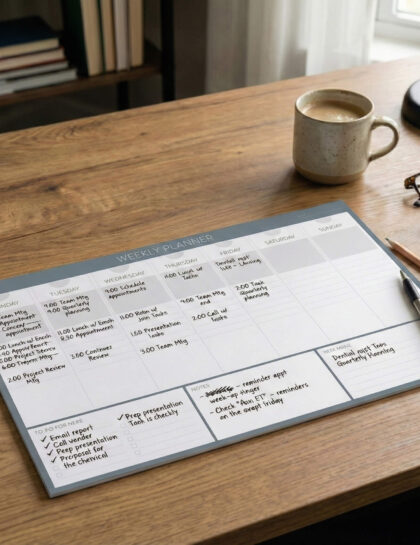
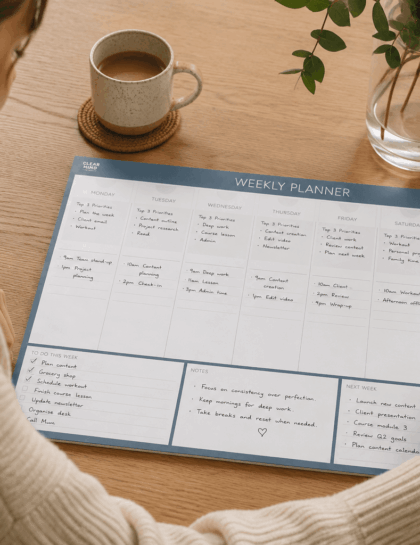
Weekly planning is the habit of looking at the coming seven days as a single canvas. Instead of filling in each hour, you note the main goals, appointments and recurring commitments for the whole week. This overview lets you see where work, home and personal time sit next to each other, so you can decide early which days need more focus and which can stay lighter.
A weekly view often reduces the need to make tiny decisions every morning. By deciding on the big – picture priorities in advance, you free up mental space for the tasks that actually matter. It also makes it easier to balance different areas of life – you could schedule a client meeting on Tuesday, a gym session on Wednesday, and a family dinner on Saturday, all without feeling you’re double – booking yourself.
A simple way to start is to set aside 10-15 minutes on Sunday evening for a weekly planning reset. Write down three outcomes you’d like to achieve by Friday – perhaps finishing a report, clearing inbox clutter, and preparing a meal plan. Then break each outcome into smaller steps and assign them to specific days. For instance, “draft report outline” on Monday, “write first section” on Tuesday, and “review and edit” on Thursday. Add a short buffer slot each day for unexpected tasks.
Most planners suggest a quick weekly review at the end of the week. This brief check – in helps you notice what slipped through and adjust the next week’s plan, keeping the system flexible and realistic.
What is daily planning?
Daily planning is the practice of laying out the tasks, appointments and time blocks you intend to handle in a single day. It gives you a clear picture of what needs your attention from the moment you wake up until you finish work, helping you avoid the feeling of juggling too many loose items. When the day is broken into manageable pieces, decision – fatigue drops and focus improves.
A simple way to start is to pick three core items you really want to move forward – often called a “focus three” – as part of daily intention setting. Write them at the top of your page, then add any fixed appointments such as meetings or calls. After that, fill in the remaining hours with time – blocked slots for the focus items, routine chores and a short break. At the end of the day, glance back and note what was finished and what needs to roll over.
A typical Tuesday might list:
1) finish the client report
2) call the dentist to confirm the appointment
3) walk the dog. Then you block 9-11 am for the report, 2-2:30 pm for the call, and 6-6:30 pm for the walk. A quick check at 5 pm shows the report is done, the call was made, and the walk is still pending – you can decide whether to shift it to the evening or tomorrow.
- Limit daily tasks to a realistic number.
- Use time blocks for each priority.
- Include a short break to reset.
- End with a brief review of what was achieved.
Keeping the layout consistent, limiting the number of tasks, and ending with a brief review are common habits that keep daily planning from becoming a chore.
Benefits and ideal situations for weekly planning
Weekly planning gives you a bird’s – eye view of the days ahead. Seeing the whole week on one page helps spot gaps, avoid over – booking, and keep larger goals in sight. It reduces the need to decide what to do each morning, which can lower decision fatigue and make the start of each day feel smoother.
It works especially well when your schedule varies day to day – such as a mix of meetings, errands, and creative work. You might sit down on Sunday evening, write down the three most important outcomes you want for the week, and sketch a loose outline of which day will host each task. For instance, “Monday – draft project outline; Wednesday – client call; Friday – review budget.” This creates a flexible roadmap without locking you into minute – by – minute blocks.
Weekly planning also shines when you need to balance personal and professional commitments. By allocating space for family duties, exercise, and downtime alongside work tasks, you can see whether any area is being neglected and make adjustments before the week begins.
Typical situations where a weekly spread feels natural include:
- Managing a project that spans several days or weeks.
- Coordinating with a team that has rotating meetings.
- Juggling irregular commitments such as childcare, classes, or freelance gigs.
- Setting aside time for weekly review and reflection.
When you regularly review the week’s layout, patterns often emerge – perhaps Tuesdays are consistently busy – and you can plan around them. This habit can bring a sense of calm and clearer focus for the days that follow.
Benefits and ideal situations for daily planning
Daily planning provides a quick visual of today’s requirements. When you record tasks, appointments, and time blocks on one page, the day’s structure becomes immediately visible. This practice eases the mental effort of choosing the next action, since the next step is already noted. It also safeguards focus time – you can reserve a 30 – minute window for a task and treat it as an unmissable appointment.
Daily planning shines when your agenda is packed or shifts often. With multiple meetings, deadlines, or a blend of work and personal duties, a day – level overview lets you place each item in the right slot. It also benefits those who enjoy routine and are building habits, such as a morning reading period or an evening review. An easy way to begin is to write tomorrow’s three top tasks on a sticky note before sleep – one of the low pressure planning habits that keeps things simple. Seeing those priorities first thing in the morning offers gentle guidance without overload.
Typical situations where a daily planner shines include:
- Days packed with appointments, classes or shifts that need precise timing.
- When you are tackling a short – term goal, like preparing a presentation for the next day.
- When you want to practice time – blocking to protect focus periods and avoid multitasking.
Hybrid approach: linking weekly and daily
Keeping a weekly spread separate from a daily page can feel disjointed. The weekly view provides a big picture – appointments, projects, recurring habits – while the daily page shows exactly what to do today. When the two communicate, weekly goals become the source of daily tasks, and daily outcomes feed back into the weekly overview. This back – and – forth removes guesswork about where items belong and keeps you aligned with longer – term priorities without sacrificing the clarity of a single – day plan.
A practical routine works well: on Sunday evening, jot down three main objectives for the upcoming week on your weekly spread. Each morning, scan that list and choose one or two items that fit today’s schedule. Write them as tomorrow’s top three tasks by hand, add any needed time blocks, and leave a small space for a quick end – of – day note. In the evening, check off completed items, note any carry – over, and update the weekly spread accordingly. After a few weeks, the weekly overview stays fresh and the daily pages feel purposeful.
- Review your weekly goals first thing each morning.
- Select 1-2 tasks that align with today’s schedule.
- Place them in your daily layout with realistic time estimates.
- At day’s end, record progress and adjust the weekly view.
Weekly vs Daily Planning: Key Differences
| Comparison | Weekly Planning | Daily Planning |
|---|---|---|
| Time horizon | Plans the next 7 days | Plans the next 24 hours |
| Decision making | Fewer daily decisions because priorities are already set | Requires deciding what to tackle each day |
| Productivity style | Keeps long-term goals moving forward | Helps complete individual tasks efficiently |
| Best personality | People who like flexibility and seeing the bigger picture | People who prefer structure and clear daily direction |
| Common mistake | Planning too much for one week | Creating unrealistic daily to-do lists |
| Works best with | Projects, business planning, study schedules and family organisation | Appointments, focused work sessions, habits and routines |
| Can it be combined? | Yes. Weekly planning sets direction. | Yes. Daily planning turns weekly goals into action. |
Neither planning method is universally better. Weekly planning gives you direction, while daily planning helps you execute that direction. Many people find the most effective system combines both: use a weekly planner to organise projects and priorities, then use a daily planner to decide exactly what you’ll focus on each day.
How to choose the right planner for you
Consider how you feel when you glance at your schedule. If you frequently wonder what comes next, a daily layout offers step – by – step clarity. If you usually juggle several projects and prefer a bird’s – eye view, a weekly spread can feel more natural. Matching the planner to the way you already organise your day reduces friction and makes the habit easier to keep.
Ask yourself these simple questions:
- Do I have a fairly fixed routine, or does my day change a lot?
- Do I prefer to see every hour listed, or would I rather block larger chunks of time?
- How much time can I realistically spend filling in a planner each morning or evening?
- Do I like to review the whole week at once, or do I prefer a quick daily check – in?
Take a short test run. During one week, use a plain notebook as a daily planner – write down three top tasks each morning and note the time you intend to work on them. In the following week, switch to a simple weekly grid and jot the main goals for each day without hour – by – hour detail. Observe which method feels less stressful and helps you finish what matters. You might write tomorrow’s top three tasks on a sticky note, then transfer them to a weekly overview on Sunday. If the daily sticky note feels cramped, the weekly view may be a better fit.
Finally, consider flexibility. A planner that lets you add or move tasks without tearing pages supports the inevitable changes in life. Choose a format that feels comfortable to open, write in, and glance at – that comfort often translates into consistent use.
Key takeaways
- Start each week by listing your top 3 priorities; use them to shape daily tasks.
- Reserve a short block each evening to review tomorrow’s tasks and make adjustments.
- Choose weekly planning when your schedule varies day-to-day; opt for daily planning on routine – heavy days.
- Keep daily to – do lists under 5 items to maintain focus.
- Link weekly goals to daily actions by copying the week’s top priorities onto each day’s list.
- Try both weekly and daily formats for a week, then keep the one that feels easiest to maintain.
FAQ
Planning can feel like a maze, especially when you’re not sure whether a daily or weekly approach fits your life. Below are some common questions and straightforward ways to think about them.
- When should I use weekly planning instead of daily planning?
Weekly planning works best when you have several commitments that shift from day to day – appointments, project milestones, or family duties. It lets you see the whole picture, set priorities for the week, and reserve time for larger tasks that need more than a few hours. If your days are relatively flexible and you prefer to decide on details each morning, a weekly overview can reduce the number of decisions you make each day. In short, use weekly planning when you need a broad roadmap and want to balance varied activities.
- How can I combine weekly and daily planning without feeling overwhelmed?
Start by writing a quick weekly overview – list your main goals, appointments, and any deadlines for the next seven days. Then each morning, pick two or three items from that list that feel most urgent or important and place them on your daily sheet or notebook. Keep the daily list short; you can always add a task later if needed. By linking the daily tasks back to the weekly view, you see how each day contributes to the bigger picture, and the limited number of daily items keeps the process light and manageable.
- What is a simple way to start a daily planning habit if I’m used to weekly planning?
If you’re used to planning the week, try a simple evening routine: look at your weekly list, choose the top three tasks you want to finish tomorrow, and write them on a small notepad or sticky note. Add any fixed appointments, then estimate a rough time block for each task. When you start the day, focus on those three items and tick them off as you go. This tiny step builds a daily habit while still keeping the weekly perspective in view.
- Do I need both a weekly and a daily planner? A weekly overview helps set the big picture – e.g., noting a meeting on Tuesday and a family dinner on Friday – while a daily page lets you break those items into concrete steps. Try using a weekly spread to choose three top priorities for the week, then each morning write the next – day actions that move those priorities forward.
- What if I miss a day? Life can get in the way. Instead of starting over, simply add a quick note to the next day’s list: “Pick up where I left off.” A brief end of day review can also capture unfinished tasks so they roll into tomorrow without extra stress.
- How many tasks should I put on a daily page? Limit yourself to three to five items that truly matter. You might write tomorrow’s top three tasks by hand – a short email, a 30 – minute report, and a 15 – minute walk – and leave space for any appointments. This keeps the page manageable and reduces the urge to overload.
- Can I use a planner if my schedule changes often? Flexibility is key. A weekly layout with blank slots works well for shifting commitments. When a new event appears, slide it into the nearest open slot and adjust the daily details accordingly.
Remember, the goal isn’t perfection but a system that supports clarity. If a method feels heavy, trim it back until it feels light enough to use consistently.
Conclusion
Whether you lean toward a weekly overview or a daily checklist, the goal is the same: to give your mind a gentle structure that frees up space for the things that matter. By noticing when one style feels more supportive and when the other fits better, you create a rhythm that respects both your larger goals and the flow of each day.
Remember, planning is a practice, not a perfect system. Starting with a simple habit – like writing three priorities for tomorrow after a brief weekly glance – can bring a quiet sense of direction without adding pressure. Trust that the right balance will emerge as you tune in to what feels clear and manageable for you.
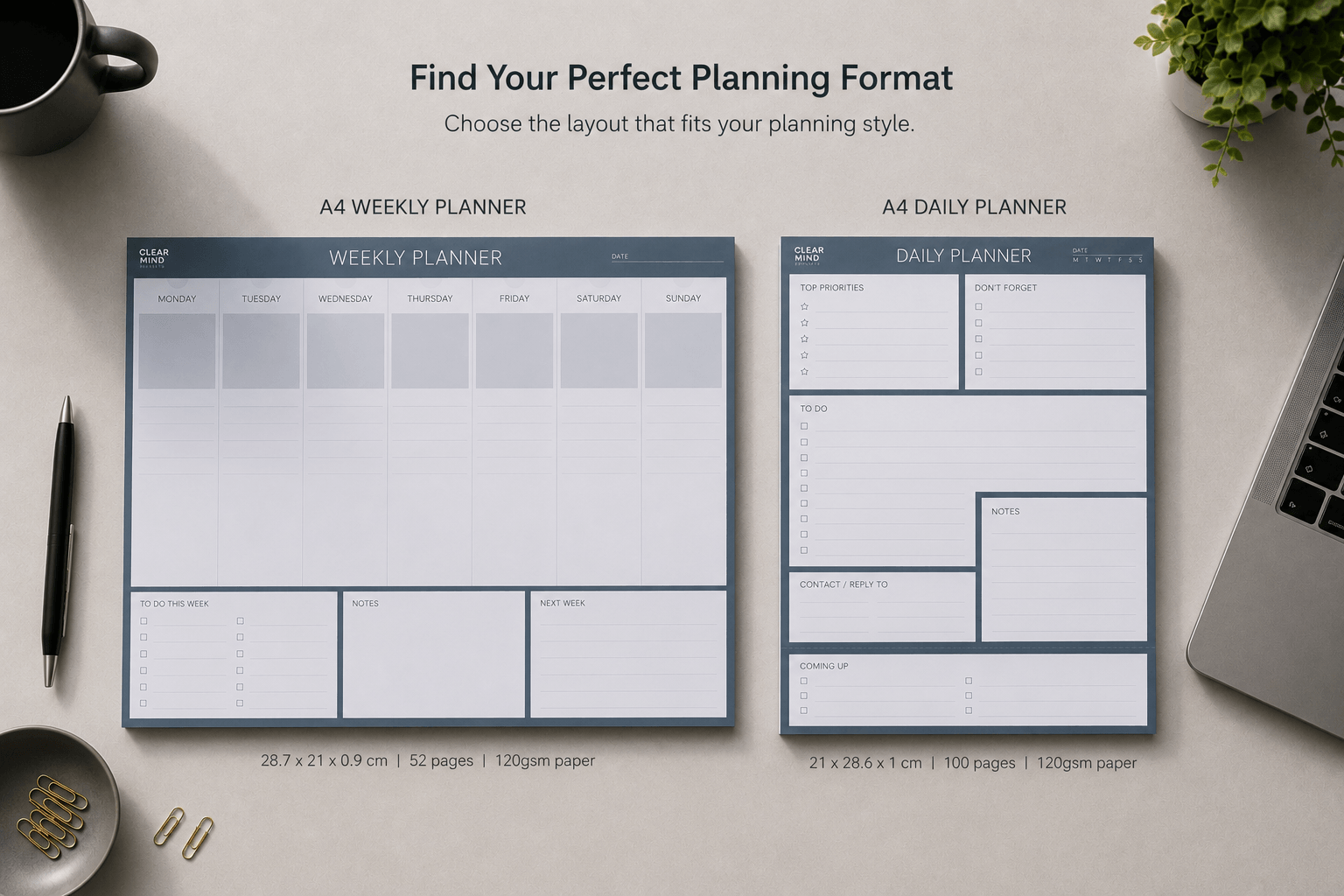
If you’re ready to try a weekly view, the Weekly Desk Pad Planner offers extra space for daily tasks and a clear overview, and you can start any week you like, it’s an optional tool to help keep your schedule simple and focussed.